Czech Republic is an amazing place to watch, experience and photograph railways in action.
The mix of traditional architecture, a great variety of trains combined with heavy traffic made for lots of visual opportunities. Over the coming weeks I’ll present samples of my most recent Czech photos on Tracking the Light
On 14 October 2016, Denis McCabe and I visited the station at Rostoky, located northwest of Prague.
Among the attractions of this location is that it is a termini for some electric suburban services that still use the classic streamlined Ceski Drahi (Czech Railways) class 451 electric multiple units.
Unfortunately, one of the arriving 451s had been unofficially decorated which marred its classic lines. Undaunted, I made my photographs none-the-less.
I made these images with my FujiFilm X-T1 fitted with 18-135mm lens.
Exposed using a FujiFilm X-T1 digital camera. Why does a ‘digital camera’ use ‘film’ in its name? Not sure, but it certainly causes confusion. And no, there was no film exposed in the making of this image.
Ok: Pan Am Railways (which takes its name from the old Pan Am Airways, the name that the railway’s parent organization acquired some years back) bought an old Wabash Railroad stainless steel dome.
Wabash was neither acronym nor a monicker.
Back in the day (before 1964 when the company was melded into the Norfolk & Western), the Wabash Railroad Company operated a Midwestern North American network that connected Buffalo, Detroit, Chicago, St. Louis, Omaha and Kansas City gateways.
The Connecticut is the north-south river that bisects New England, and which forms the boundary between New Hamshire and Vermont while crossing the states of Massachusetts and Connecticut. (Sorry, I don’t know if the state was named for the river or vice versa).
I made this photograph from the west bank of the river at East Deerfield, Massachusetts last August (2016.)
Not one, not two but three cameras served as my visual capturing arsenal last Saturday.
I had so many files to download that it’s taken me a few days to finally get this selection ready for review.
Is more better?
As with my FujiFilm X-T1 photos, with my Lumix I was interested in capturing some of personalities on Railway Preservation Society of Ireland’s The Western Explorer.
Getting the right angle at Connolly Station before the trip. Saturday 22 October 2016.Saturday 22 October 2016.Documenting the down run.Washboard sky at Monasterevin. Saturday 22 October 2016.Saturday 22 October 2016.Gort. Saturday 22 October 2016.Gort. Saturday 22 October 2016.Ennis, County Clare. Saturday 22 October 2016.Ennis, County Clare. Saturday 22 October 2016.Irish Rail station building at Ennis. Saturday 22 October 2016.Limerick. Saturday 22 October 2016.Limerick. Saturday 22 October 2016.Limerick. Saturday 22 October 2016.Limerick. Saturday 22 October 2016.Limerick. Saturday 22 October 2016.Limerick. Saturday 22 October 2016.
A brisk autumnal wind blew through cobblestone streets in Olomouc, Czech Republic.
I wandered with camera in hand, making images of trams grinding along in the dark of night.
These images were exposed on Fuji Neopan 400 using a Canon EOS-3.
I processed the film using Kodak HC-110 diluted 1-64 with water, with an extended pre-soak featuring an extremely dilute developer to help process shadow areas.
By design, my results are grainy and heavily textured to accentuate the effect of harsh lighting on the cobblestones and ancient buildings of the old Moravian capital.
All 50 photos were exposed on 25 October, albeit in different years.
Shamokin, Pennsylvania; October 25, 1959. Photo by Richard Jay SolomonPort Clinton, Pennsylvania; October 25, 1959. Photo by Richard Jay SolomonReading Ramble in Pennsylvania; October 25, 1959. Photo by Richard Jay SolomonReading Ramble in Pennsylvania; October 25, 1959. Photo by Richard Jay SolomonPalmer, Massachusetts October 25, 1985.Palmer, Massachusetts October 25, 1985.Palmer, Massachusetts October 25, 1985.Palmer, Massachusetts October 25, 1985.Newark, Delaware, October 25, 1991.Marcus Hook, Pennsylvania, October 25, 1991.Near Eddystone Pennsylvania, October 25, 1991.Near Eddystone Pennsylvania, October 25, 1991.D-Tower Grafton, West Virginia, October 25, 1992.East Grafton, West Virginia, October 25, 1992.Amtrak’s Capitol Limited approaching Cumberland, Maryland on October 25, 1993.Amtrak’s Capitol Limited approaching Cumberland, Maryland on October 25, 1993.CSX near Falls Cut, Pennsylvania on October 25, 1993.CSX near Falls Cut, Pennsylvania on October 25, 1993.Conrail near Middlefield, Massachusetts on October 25, 1996.Conrail near Middlefield, Massachusetts on October 25, 1996.Conrail west of Chester, Massachusetts on October 25, 1996.Vermont Rail System equipment on passenger special over New England Central near Stafford Springs, Connecticut, October 25, 1998.Cincinnati Union Station on October 25 2002.Cincinnati Union Station on October 25 2002.Cincinnati Union Station on October 25 2002.Sunrise at Palmer, Massachusetts October 25, 2009.Sunrise at Palmer, Massachusetts October 25, 2009.East Brookfield, Massachusetts, October 25, 2009.CSX Q264 at East Brookfield, Massachusetts, October 25, 2009.CSX Q264 at East Brookfield, Massachusetts, October 25, 2009.CSX Q168 at Charlton Depot, Massachusetts, October 25, 2009.Islandbridge Junction, Dublin, Ireland on 25 October 2011.Islandbridge Junction, Dublin, Ireland on 25 October 2011.CSX empty ethanol train near Brookfield, Massachusetts on October 25, 2013.CSX empty ethanol train near Brookfield, Massachusetts on October 25, 2013.Old Boston & Albany yard at East Brookfield, Massachusetts on October 25, 2013.Amtrak train 71 at Hyde Park, Massachusetts on October 25, 2014.Amtrak train 71 at Hyde Park, Massachusetts on October 25, 2014.MBTA’s Matapan-Ashmont line on October 25, 2014.MBTA’s Matapan-Ashmont line on October 25, 2014.MBTA’s Matapan-Ashmont line on October 25, 2014.
MBTA’s Matapan-Ashmont line on October 25, 2014.
Amtrak 449 at Auburndale, Massachusetts on October 25, 2014.Amtrak 449 at Auburndale, Massachusetts on October 25, 2014.
And a final four exposed today, 25 October 2016:
Irish Rail 231 departs Heuston Station with the 0900 to Cork. 25 October 2016.Irish Rail 29000-seres train passes Seapoint, Dublin on 25 October 2016.Irish Rail drivers training special with preserved Cravens passes Seapoint, Dublin on 25 October 2016.25 October 2016.
Yesterday, I presented scaled camera JPGs of Railway Preservation Society of Ireland’s The Western Explorer, which operated from Dublin’s Connolly Station on 22 October 2016.
Today’s selection, are photos made using my FujiFilm X-T1 digital camera, but using the Camera RAW files and manipulating the data in Lightroom to present a more pleasing image.
Using contrast controls, I’ve maximized detail in highlights and shadows while adjusting colour saturation and exposure to produce more refined final images.
The day of trip featured fine weather and fluffy/lacey clouds decorated a largely blue sky. To bring in sky detail, it was necessary to locally adjust exposure and contrast using a digitally applied graduated filter.
In other instances, I manually lightened shadow areas, that without such adjustment would appear too dark and lacking in necessary detail.
I was especially impressed with the sky at Tullamore, Co. Offaly. Although I had my graduated neutral density filter kit in my camera bag, the hasty nature of photo stops was not conducive to using it. Instead, I’ve had to make due with digital adjustment in post processing.Athlone.A little contrast control goes a long way. By lowering the highlights and brightening the shadow areas, I was able to make for a much more pleasing image.
Wide angle view of RPSI’s the Western Explorer at Athenry, County Galway.Gort station features a modern footbridge that uses thick sheet-metal meshes. The effect of the holes in the mesh distorts the light resulting in some peculiar patterns. The patterns are not the result of digital image processing.Another view at Gort station.Photographers were looking for angles at Ennis, County Clare. The station shadow made for a challenging used of light.At Dromkeen, the special crossed an ICR on its way to Limerick.I made a series of views from the train windows. This one was exposed using my FujiFilm X-T1 with Zeiss 12mm Touit lens.A view with the Zeiss 12mm Touit lens
Yesterday (22 October 2016) the Railway Preservation Society of Ireland in cooperation with Irish Rail operated a diesel-hauled excursion making a circle trip from Dublin’s Connolly Station.
Among the goals for the tour was a fundraising effort to help restore RPSI’s 1960-era class 121/141 General Motors diesels to traffic.
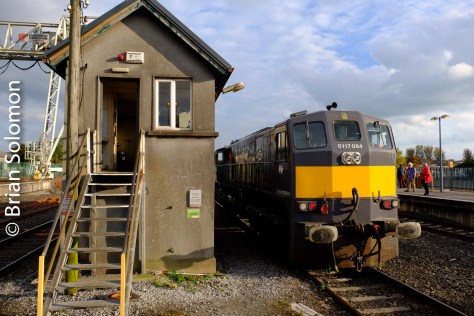
To emphasize the roll of heritage diesels, Irish Rail locomotive 071 (class leader) wearing the retro 1970s ‘Super Train’ livery worked from Dublin to Limerick, with engine 084 (in modern gray and yellow) bringing the train back up to Dublin.
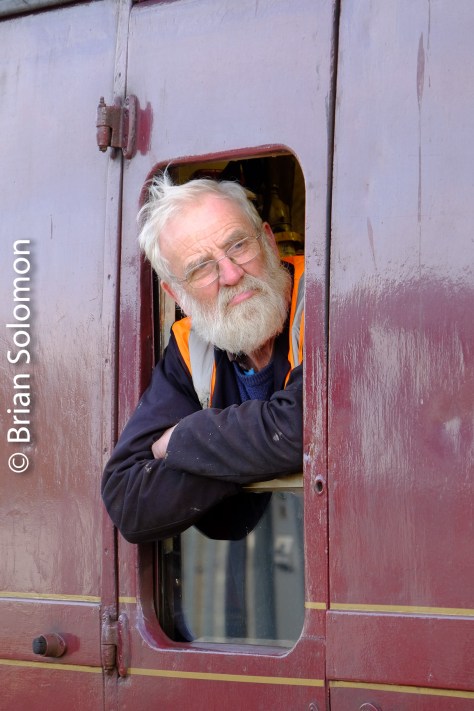
My interest was in capturing the spirit of the day. In addition to photographs of the equipment, I focused on people; Irish Rail employees, RPSI volunteers and organizers, and passengers.
My cameras were busy all day. I made more than 500 digital images; so I’ll be editing my files for some hours yet.
This first round of photographs is a selection of camera-JPGs from my FujiFilm X-T1 digital camera. Since the JPGs don’t require much work (except for scaling) these are easier to put up quickly. Later I’ll present a selection of images made from Camera RAW files, and finally a few views with my Lumix LX7.
As is often the case, I also exposed some 35mm slides, but those remain latent for the moment.
071 at Gort.Irish Rail 071 detailed view FujiFilm X-T1 digital photo using the Velvia colour profile.Fields of enthusiasts at Athenry.
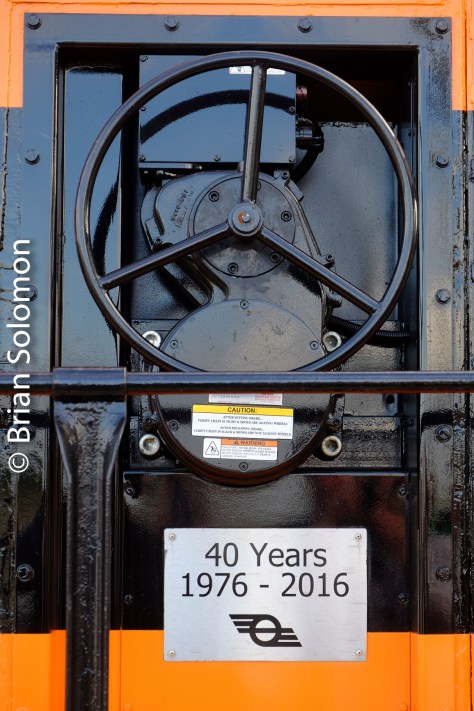
Attymon, County Galway. Telephoto view from the road bridge.Athenry, County Galway.Tullamore. Gosh, where’s the old cement train gone?In the spirit of the day.Ennis, County Clare.Detailed view of Irish Rail class 071, a 1976 built General Motors six-motor diesel.Discussing logistics.Noel Enright poses with 071 at Athlone.
Checking the football scores.Getting the shot.Running for the train at Thurles.Happy Birthday Tina!
Last week, I made these photos at Prague’s Main Station using my Lumix LX7.
To make this view, I used one of the station shed supports to position my Lumix LX7 and hold it steady during the length of the exposure.Among the station’s architectural attractions are its arched entryway and domed waiting room. Since my visit in 2000 this dome has been restored to its former glory. Lumix LX7 view looking up.A CD passenger train waits under the twin span arched train shed. This angle was made by placing the Lumix on the station platform to hold the camera steady during the relatively long exposure. To minimize camera shake I used the self timer (set to 2 seconds).A double-deck suburban electric multiple unit decorated to commemorate an anniversary of Czech Railways basks in the evening glow at the south end of Prague’s Main Station. Lumix LX7 photo.
I featured : Praha Hlavani Nadrazi (Prague Main Station) in my recent book Depots, Stations & Terminals published by Voyageur Press.
In 1919, Prague main station was renamed Wilsonova Nádrazi in honor of American president Woodrow Wilson. The name was dropped after German annexation and occupation during World War II, and appears to have been forgotten during the postwar period of Soviet influence that prevailed until the Czech Velvet Revolution in November 1989. The name change was the least of the station’s problems. During this dark period of Czech history, the station was allowed to deteriorate and by the mid-1990s was a dismal shadow of its former glory.
After an unanticipated outage (known in some circles as an ‘Outrage’), Tracking the Light is back on line.
As I’ve previously reported here, I’ve been traveling and without regular email access. During this time the inevitable occurred.
Perhaps the best way to describe the situation is: a fellow named ‘Murphy’ formerly of the legal department (for which his work is infamous) appears to have transferred his creative activities to Information Services, and with predictable results.
Yesterday: OBB was having a more reliable day than Tracking the Light. I made this view at Amstetten, Austria on the Westbahn, about the time that I learned of the Tracking the Light outage. Lumix LX7 photo.
Any way, after some phone calls, and the efforts from my dad, Richard J. Solomon, Tracking the Light seems to be again working as intended.
However, If you are still experiencing difficulties, you may need to clear your browser’s cache or history in order to remove yesterday’s defective link.
Long Island Rail Road’s Hudson Yards on the westside of Manhattan.
Funny how the internet’s autocropping tends makes a mockery of my composition. Be sure to click on Tracking the Light to see the photo as I intended to present it.
I exposed this view of Long Island Rail Road suburban trains at Manhattan’s Hudson Yards using my Lumix LX7. Thin cloud with a hint of air pollution makes for soft brown-tinted light.
Tracking the Light is on Auto-Pilot while Brian is Traveling.
On July 19, 1992, Southern Pacific’s SNTA-C descends the west slope of Donner Pass near Midas, California.
I exposed this trailing view of Southern Pacific’s SNTA-C (Skyline Mine, Utah to Trona, California—coal) on its descent of Donner Pass using my Nikon F3T with a Nikkor 200mm lens.
Kodachrome 25 was my film of choice. It performed very well under bright California skies.
Tracking the Light is on Autopilot while Brian is traveling.
Amtrak’s Maple Leaf near Sunnyside in Toronto on the first leg of its journey to New York’s Pennsylvania Station.
on a frigid February 2010 morning, I exposed this view on Fujichrome using my Canon EOS-3 with a 100-400mm zoom lens.
This was one of dozens of action photos I made while traveling with Chris Guss and Pat Yough that day.
One of the great challenges in working in sub-zero temperatures is short battery life. While my Canon film camera faired reasonably well, my poor Panasonic Lumix LX3 digital camera did not. By noon two of my three batteries had gone flat.
Tracking the Light continues to post Daily while Brian is on the road.
You know you’re having a photographically productive trip when you have a week’s worth of keepers after the first evening out.
Prague, Czech Republic is among the world’s great tram cities.
It’s hard to beat for its variety of cars and paint liveries, combined with stunning urban scenery, a large of number of routes and extensive route mileage (kilometerage?), plus intensive frequency of operation.
I’ve visited before, but I’m still stunned by observing the incredible number of trams gliding through the streets. This is among the most interesting urban railways, anywhere.
Here’s just a few photos from my Lumix LX7 exposed on a rainy evening in Prague.
Among the last active installations of ‘somersault’ signals has survived on NI Railways at Castlerock, County Derry, Northern Ireland.
The somersault is an antique variety of two-aspect semaphore where the signal arm and spectacle (lens) frame are separate pieces and move in opposite directions when the aspect changes. The name stems from a description of the signal motion.
Earlier this month Denis McCabe, Stephen Hirsch and I traveled from Dublin to pay a final visit to this classic signal installation and make photographs of modern NI Railways railcars with the antique hardware.
New NI Railway’s signalling is underway on this section of the Coleraine-Derry line. It is my understanding that in early November, NIR plans to close Castlerock’s cabin (signal tower) and the signals will be removed from service as part of a larger re-signalling scheme that will also eliminate this station as a passing point.
The starting signal to Derry has been cleared by the signalman at Castlerock.This rear view of the same signal provides a sense for how the signal works. Unlike the more common semaphore arrangement, the arm and lens housing are separate pieces, but interlocked for coordinated movement.An NIR railcar from Derry to Belfast approaches Castlerock. I’ve intentionally focused on the old signal, rather than the NIR railcar. Fear not railcar enthusiasts, I have sharp photos of NIR railcars on the move! Exposed using my FujiFilm X-T1 digital camera.Looking toward Belfast at Castlerock from the down platform. Soon this view will be forever altered, as the platform I’m standing on will no longer be served and the signals will be removed.A Derry-bound NIR railcar approaches Castlerock as viewed from the footbridge.A trailing view of the Derry-bound train. Exposed using my FujiFilm X-T1 digital camera.
Although, I’d visited Castlerock previously, it had been a few years since I last photographed these old signals at work.
Special thanks to Colin Holliday reminding me of the pending changes to Castlerock signaling!
The old Youghal Branch is still there if you know where to look for it. It’s a vestige from another time, which makes it all the more fascinating to me.
A few years back Irish Rail rebuilt and reactivated the line from Cobh Junction to Midleton, Co. Cork, but beyond there the line is dormant. The last move east of Midleton, occurred in 1988. And prior to that trains were—at best—infrequent.
Earlier this month, Ken Fox gave me a detailed tour of the old railway, much of which is now heavily overgrown.
To the untrained eye (no pun intended) there’s little to see in most places. You could easily miss the railway altogether.
Yet, below the weeds, bushes and detritus are rails and sleepers. It more than just track; signal cabins still stand at Killeagh and Youghal, as do the old stations at Mogeely and Youghal.
Mogeely has been cleared, and there’s plenty to explore around the old station area.
The old signal cabin at Youghal is covered up and forlorn, its bells ring no more. Exposed using a Fujifilm XT1 with Zeiss 12mm Touit lens.Irish Rail’s station at Youghal hasn’t seen a regularly scheduled passenger service in more than 50 years, although specials worked the line into the 1980s. Lumix LX7 photo.Ken Fox and I explored the hillside on the northeast side of the old yard at Youghal. I’d seen photos from this hillside back when the line was still active and I hoped to find this angle. Note the position of the station and signal cabin. Lumix LX7 photo.Killeagh is easily missed. The line is almost complete overgrown, yet the old cabin survives. Lumix LX7 photo.Irish Rail signal cabin at Killeagh. The line is to the left of the cabin. Believe it not, the tracks are still there! Exposed using a Fujifilm XT1 with Zeiss 12mm Touit lens.An old rail serving as a post at Killeagh. Exposed using a Fujifilm XT1 with Zeiss 12mm Touit lens.The area immediately around the station at Mogeely has been cleared of brush and debris. Exposed using a Fujifilm XT1 with Zeiss 12mm Touit lens.Mogeely looking west toward Cork. Exposed using a Fujifilm XT1 with Zeiss 12mm Touit lens.Mogul looking east. Hard to believe its been 28 years since a train last traveled these rails. Notice the old signaling rods. Exposed using a Fujifilm XT1 with Zeiss 12mm Touit lens.I made this view at Mogeely using my Lumix LX7.
I made these photos using my Lumix LX7 and Fujifilm XT1. Any favourites?
Tracking the Light is on autopilot while Brian is traveling.
For more than three years I’ve made an effort to post something new, each and every day.
If you are not already subscribed, have you considered subscribing? There is no cost: the primary advantage to a subscription is that an automatic notice is sent out with each and every post. This is more reliable than feeds via Facebook, Twitter, and Google Plus, and even my own Email notices.
I prepare posts in advance and put them in a queue on Word Press. I’ll assign to each posting a date and a time when it is supposed to appear on the web.
Sometimes owing to a technical fault, posts may miss its scheduled posting time. When that happens, I have to manipulate the system and post manually. (Post is both a noun a verb).
I like to keep the site timely, but it’s not intended as an up to the minute news source.
Although I often write daily, I tend plan post schedules so that photos appear several days after I make them. This is by intent.
That said, sometimes when I find something of immediate interest (such as Monday’s IWT Liner), I’ll make an effort to get the subject out there quickly for public consumption. (Thus Tracking the Light’s ‘Extra Posts’).
In other situations, I’ll capture something unique (or at least very unusual) but opt to hold that back for future presentation.
For every photo I’ve displayed on Tracking the Light, I have dozens more waiting for their day in the sun (metaphorically). The very best have yet to be seen!
For the next few days I’ll be traveling and may not have regular access to the internet. As a result, Tracking the Light will be coasting ‘autopilot.’
This means, I’ve placed a large batch of posts in the queue so that you should see something every day while I’m on the road.
If for some reason, a post misses its posting time, I may not be in a position to fix it right away.
Fear not, new material is being exposed! On digital, and with film.
Stay tuned!
An Amtrak Empire Service train led by a dual-mode GE Genesis diesel makes for a modern silhouette along the Hudson at Castleton, New York in 2004. Exposed on Fujichrome using a Contax G2 rangefinder with 28mm Zeiss Biogon.
Some of Ireland’s finest rail-side scenery is in the North. At Downhill, Co. Derry massive vertical cliffs rise high above the Belfast-Derry line, with the great expanse of the North Atlantic beyond.
In October, lighting can be a bit tricky, as the same cliffs that make the scene and offer elevation also block the sun much of the day.
One trick: filtered sun (that is with thin cloud) makes for a less contrasty scene. By carefully exposing for the shaft of light at the center of the image, and then impose a digital graduated neutral density filter at the top of the frame, I was able to produce a balanced over-all image.
A distant view where the subject is but a spec in a vast scene.Using my 18-135 zoom, I’ve remained at the same cliff-side vantage point, but pulled back the focal length. Here the NI Railways 4001-series railcar is more prominent.The photographer’s quandary: with a wide view, you can include the ocean, but the cliffs seem smaller relative to the whole scene.
The other afternoon, I made these photos with Denis McCabe and Stephen Hirsch which feature a Derry to Belfast NI Railways railcar. While I worked primarily with my FujiFilm X-T1, I also exposed a few 35mm colour slides using my old Canon EOS-3 with 100mm lens.
As of this posting, those slides remain latent (exposed, but unprocessed), so we’ll need to wait to see if I got my exposure correct. (My notes read f7.1 at 1/250th of a second, which is consistent with the reading from my Minolta Mark4 handheld light meter, but a bit on the dark side for the camera meter).
Note to Tracking the Light readers: The most effective way to receive Tracking the Light daily is to Subscribe!
PKP Ty45 works tender first at Stefanowo, Poland on 25 April 2002. Exposed on Fujichrome using a Nikon N90S.
Look back 14 years to a visit to Poland:
Iridescent grass, steam and semaphores, how can you go wrong?
I realize that someone might complain that the engine is working tender first. If so, they can complaint to PKP for their lack of turntables: Keep in mind this is a real revenue freight using an engine based at the roundhouse at Wolsztyn, Poland.
Tracking the Light posts daily with feeds to Facebook, Twitter, Google Plus, Tumblr and other social media.
Last May (2016), I made this view of an eastward CSX stack train descending the old Boston & Albany grade over Washington Hill.
I was just east of the old Middlefield Station (long defunct), where my late friend Bob Buck had exposed some classic images of B&A’s A1 Berkshires.
A hill behind me blocks the rising sun, until after 6:30am in May. I could hear the train descending as the first rays of sun tickled the iron. Morning clouds waft across the sky making for inky shadows.
Exposed using a Fujifilm X-T1 digital camera.
Brian Solomon’s Tracking the Light is on auto pilot.
Tracking the Light attempts to post daily! (even when plagued by technical faults, internet outages, and an ambitious travel schedule).
Here’s a variation on the then-and-now theme. The same rail car, with the same semaphores, on the same track, but viewed more than 17 years apart!
Irish Rail 2616 at Kent Station, Cork in August 1999. Exposed with a Nikon on Fujichrome Sensia II.Same railcar, same spot, exposed on Sunday 2 October 2016 using a Fujifilm X-T1 digital camera. Who would have thought back in 1999 that those mechanical semaphores would still be in place!
Only see one photo? Well you’ll need to visit Tracking the Light‘s original post to get the comparison. Click on the link below.
Today (7 October 2016), Dublin’s LUAS Green Line was out of service owing to an unspecified disruption.
Mark Healy and I were exploring progress LUAS Cross City works near the St. Stephen’s Green, where we found no-less than four Alstom Citadis trams inoperable and parked.
As of 2:45pm, LUAS was reporting that Green Line service remained suspended.
More recent reports indicate it could be Saturday morning before service resumes.
Here’s another view I made on Irish Rail’s former Great Northern line at milepost 25 near Mosney. I published a digital colour view of the Grand Hibernian the other day from this same vantage point.
Irish Rail’s 29000-series diesel rail cars are common trains on this route. They do their job well and travel up and down the line all day long. Many photographers ignore them because they are common.
Add in some dull light and tangent track, and the photography threatens to be, well, boring.
Expose on Ilford HP5 using a Nikon F3 with 24mm lens and red filter. Film processed in Kodak HC110 (Dilution B, 1:32 with water) for 3 minutes 30 seconds at 68F (20C).
Here’s what I did to make an interesting image; I worked with the texture of the scene. Rather than make a digital image, I used my old Nikon F3 fitted with a 24mm Nikkor lens and a dark red filter.
The red filter alters the way the film interprets the colours in the scene. Specifically, it allows for better detail in the sky, while darkening the greenery.
I also added a sense of depth by including the vines growing along the bridge parapet. This is a little trick I’ve used on many occasions in Ireland, and it helps to have a wide angle lens to make it work.
So while the train isn’t the most exciting on the rails in Ireland, I’ve used these old-school methods and created an interesting scene by working with the natural textures.
I noted this scene the other evening while walking by the Dublin Bus Conyngham Road bus depot.
Historically this facility was a tram depot for the Dublin & Lucan tramway.
What caught my eye were the reflections in the bus windows that make for array of abstract patterns.
An impressive line-up of road vehicles at the old Conyngham Road Depot in Dublin. The premises of the Irish Railway Record Society is located just beyond the buses on the south side of the River Liffey near Heuston Station.
I exposed this view on Ilford HP5 using my Nikon F3 with an f2.0 135mm lens. My processing was a bit complicated. After a three minute water bath with a very small amount of HC110 to start the processing, I used a dilute developer solution (HC110 1 to 64 with water) at 68 degrees F for 4 minutes.
After a full fix, hypoclear, and wash cycle, I then toned the negatives in selenium at a ratio of 1 to 9 with water for 8.5 minutes with regular agitation. (Please note: selenium solution is poisonous and exceptional care should be considered when working with it.)
The effect of the selenium toning is to accentuate the brightest highlights which produces a silvery glow. A secondary effect is greater longevity: the selenium solution produces an ion exchange with a portion of the silver in the film and selenium offers great stability long term.
Tracking the Light Discusses Photography Daily.
Tracking the light will be on ‘Autopilot’ for the next couple of days, but will continue to display new material every morning.
Tonight (Monday 3 October, 2016)- I’ll be presenting a variation of my slide program Irish Railways Looking Back Ten Years to the Cork Branch of the Irish Railway Record Society at 8pm in the Metropole Hotel in Cork City.
During 2005 and 2006, I exposed thousands of colour slides of Irish Railways. Fear not, I will not attempt to present all of these slides this evening!
Among my out-takes is this sequence exposed in summer 2006 of Irish Rail 201 diesels with passenger trains at the top of Ballybrophy Bank.
Tracking the Light Explores Photography Every Day!
Tracking the light will be on ‘Autopilot’ for the next couple of days, but will continue to display new material every morning.
I’m traveling to Cork on Irish Rail’s 0830 Dublin-Heuston to Tralee scheduled train.
Tomorrow (Monday October 3, 2016.), I’ll be presenting a variation of my slide program Irish Railways Looking Back Ten Years to the Cork Branch of the Irish Railway Record Society in the Metropole Hotel in Cork City at 8pm.
Here are a few views exposed with my Lumix LX7 at Heuston Station and on the train-posted LIVE from the train thanks to Irish Rail’s WiFi.
Sunrise at Heuston Station exposed with my Lumix LX7. Where’s John Gruber’s nun?
Exposed at Heuston Station with my Lumix LX7.Exposed with my Lumix LX7 from the train at Heuston Station.Irish Rail ICR at Heuston Station on Sunday morning.Crossing the Curragh in the fog, Lumix LX7 Photo.The Medium is the Message—My laptop on the train as I’m producing this post-the file was downloaded directly from the card to WordPress.There’s my Lumix next to the Apple. Exposed with my FujiFilm XT1 passing Templemore.10:30am: Reflections at Limerick Junction That’s the Limerick-Limerick Junction shuttle that’s parked on the adjacent platform ‘out of service’.. Lumix LX7 Photo.View near Killmallock, County Limerick. Lumix LX7 photo.
By the way, just in case anyone is curious; Irish Rail 071 in the retro ‘super train livery’ is at the yard in Portlaoise with a spoil train.
Tracking the Light is Daily!
Tracking the light will be on ‘Autopilot’ for the next couple of days, but will continue to display new material every morning.
The other day I made this sequence from the down platform at Mallow, County Cork.
What makes these photo interesting to me was the textures of the sky.
Looking toward Cork from Mallow.By introducing a digital graduated neutral density filter I was able to make the most of the texture in the sky.
In order to get the most of the sky, in post processing I worked with the camera RAW files and adjusted the contrast, colour saturation and exposure. In this situation my manipulation is a little more heavy handed than usual. I paid special attention to the highlight density.
This image was exposed just a few minutes later, notice how the sky has changed.Irish Rail 083 was running around the Railway Preservation Society Ireland’s Cravens set (working as Emerald Isle Express.) This view has the most impressive sky in my estimation. I’ve used a slightly wider focal length to make for a more dramatic view.
Yesterday, a tragic railway accident thrust Hoboken Terminal into the news.
Since then, I’ve had many requests from Tracking the Light viewers regarding NJ Transit’s Hoboken Terminal—a station that I’ve featured on several occasions.
For the first time, Irish Rail’s Killarney simultaneously hosted passenger trains from three different operators.
In addition to its own scheduled service from Tralee to Mallow, Belmond’s Grand Hibernian, and Rail Tours Ireland’s Emerald Isle Express were in the station.
I was one of several photographers on site to capture the moment.
Belmont’s Grand Hibernian arrives at Killarney, passing the old signal cabin.Rail Tours Ireland’s Emerald Isle Express and Belmond’s Grand Hibernian occupy adjacent tracks at Killarney on 28 September 2016.Killarney, County Kerry on 28 September 2016.Three trains; three operators.
I exposed these images using my FujiFilm X-T1. To compensate for changeable lighting, I processed the camera RAW files in Lightroom, making a variety of small adjustments to exposure, contrast, and saturation to produce more effective photographs.
I arrived at Kent Station, Cork on the 0800 train from Dublin.
Irish Rail ICR at Kent Station, Cork on the morning of 28 September 2016. Exposed with a Lumix LX7.
My timing was tight; I was aiming to catch Rail Tours Ireland’s Emerald Isle Express under the curved roof.
After arriving in Cork, I had less than five minutes to get into position.
Although visually fascinating, Kent’s Victorian-era shed is a tricky place to make photos. The characteristic curvature makes selecting the best angle tough, while the lighting under the roof is limiting.
Using my Lumix LX7 at ISO 200, I was restricted to 1/15th of second at f2.2.
Sometimes limitations force me to make more interesting photos.
The characteristic roar of an EMD 645 diesel reverberates under the ancient roof.As the Emerald Isle Express approached with engine 083 in the lead I opted to slightly pan the train. This provides a sense of motion while setting the shed off in a sea of blur.
Nearly nine years ago, I made this view of an Irish Rail spoil train passing my familiar location at Islandbridge Junction.
The sun was low in the sky, which can make for nice light, but rapidly moving clouds rolling across the sky made for difficult lighting conditions. The exposure would vary by as much as two stops from one moment to the next.
Further complicating matters I gauged the exposure incorrectly and this resulted in a fairly dark slide. Sometimes, rich Novmeber sunshine isn’t as bright as it looks.
Lastly, the processing was substandard. Overall this batch of slides suffered from inadequate detail in the shadow areas and a strong red-magenta colour-cast, giving this image an unnatural appearance.
The other day I decided to see what I could do to improve this image. You might ask, “Why? Don’t you have plenty of railway photos from the this place?”
I do. Hundreds. But Irish Rail spoil trains are some of the most elusive moves on the network. Also, the equipment is this scene has all been withdrawn. The class 141 diesels no longer work on Irish Rail—although several have been preserved—and the old four-wheel spoil wagons were replaced with modern bogie wagons several years ago.
The scene itself has changed as the old Clancy Barracks to the left of the train has been developed and the area looks quite different today.
Using Lightroom, I implemented a variety of digital changes to a Hi-Res scan, which ultimately produced a far more realistic image. Below are a sequence of images that show what I’ve done.
This scan presents the slide more or less as it appears. Not only is it too dark because of underexposure, but it suffers from imperfect processing that resulted in poor shadow detail and a reddish-magenta colour cast. This is a pity, because it features a difficult train to capture and very interesting lighting conditions. I exposed the photo in November 2007 and it sat in its box for nearly nine years.I scanned the slide with my Epson V500 scanner, the using Lightroom, I was able to implement a variety of changes. I balanced the colour to appear more natural and eliminate the pink tint. Also, I manipulated the contrast control sliders (contrast, highlights, shadows, whites, blacks and clarity) to lighten the image while reducing the overall contrast and improving the appearance of the shadow areas. This screen shot shows part of what I did.This image benefits from my first round of colour and contrast corrections, yet the shadows are still muddy and the overall scene is too dark.This is my semi-final image. I’ve selective lightened some of the muddy areas, while lowering the overall contrast and tweaking the highlights to make for a more pleasing and natural looking image. The files presented here are all scaled Jpgs made from large hi-resolution TIF files.For my final adjustments, I further lightened the whole image, while manually darkening the shadow areas and further softening the contrast. This might not be perfect, but its a huge improvement over the original Fujichrome colour slide.
The Emerald Isle Express is an annual tour train operated Rail Tours Ireland in cooperation with Irish Rail and the Railway Preservation Society Ireland.
I had advanced notice of this year’s schedule and planned to catch it running along the Irish Sea south of Dublin on its way down the old Dublin & South Eastern route toward Rosslare Europort.
I rode the DART electric suburban train to Dalkey then hoofed it out toward Sorrento Point, where my planned location turned out to be fouled by undergrowth and related shadows.
‘Uh oh.’ Time to move to plan B.
More walking brought me to this footbridge between Dalkey and Killiney.
Although supremely picturesque, the maze of direct current overhead wires and related masts make finding a suitable angle difficult.
I wanted to include more of the Irish Sea to the right of the train, but putting the train too far to the left didn’t really work as an effective composition. Ultimately I settled on a more conservative angle. Soft sun helps reduce the distraction of the wires.
Emerald Isle Express at milepost 9. To hold detail in the sky and water, I used a Lee 0.6 graduated neutral density filter. This tool has proved repeatedly valuable in Ireland where sky contrast often presents an exposure problem by exceeding the dynamic range of the camera’s digital sensor.This tight view reveals some of the clutter that makes this location challenging as an effective location.
A minor disappointment; I’d hoped that Irish Rail engine number 071 (in bright orange heritage paint) would lead the train. Instead, I settled for that old stalwart; Irish Rail engine 078.
The trailing view is scenically spectacular but as a result the train is small.Looking across Killiney Bay you’ll notice the thin silver streak of the Emerald Isle Express catching the glint of the noontime sun.
Too often railway photographs focus on the equipment—locomotives, railway cars, signals—and exclude the people who work on the railway.
I’ll admit I’m guilty of that sometimes. However, I’ve always made photos of railway workers, and try to include people in my photos whenever it’s practical.
That’s not always easy, especially on many modern railways that have streamlined their workforces.
These days I’ll work my personal connections and photograph railway friends when it’s appropriate.
Cork-based Irish Rail train driver Ken Fox poses for a portrait with his InterCity Railcar at Dublin’s Heuston Station. Exposed on Ilford HP5 using a Nikon F3 with Nikkor f1.8 50mm lens. Processed in Kodak HC110 (dilution D) and scanned with an Epson V500 flatbed scanner.
I like this portrait because it puts the train driver in a positive light while his train takes a supporting roll, serving as a relevant backdrop rather than primary subject.
I’ll be presenting a variation of my slide program Irish Railways Looking Back Ten Years to the Cork Branch of the Irish Railway Record Society at 8pm on Monday October 3, 2016.
The program will be held at the Metropole Hotel in Cork City.
I gave a version of this program titled ONE YEAR ON IRISH RAILWAYS; LOOKING BACK TEN YEARS on 10 March 2016 to the Dublin Branch of the Irish Railway Record Society.
While the core of the program will be similar, I’ve added a variety of new material to keep it interesting and fresh.
Irish Rail 213 at Kent Station, Cork. Exposed on Fujichrome, scanned with an Epson V500.Railway Preservation Society Ireland engine 186 arrives at Farranfore, County Kerry on 6 May 2006. Notice the effect of depth created by lining up the lighting posts on the right.Waterford-Ballina Norfolk Liner crosses the River Barrow at Monasterevin.


 Tracking the Light posts daily.








 Tracking the Light Posts Daily!


